Franz Kafka’s novel The Trial begins ominously:
“Someone must have been spreading lies about Josef K for without him having done anything wrong he was arrested one morning.” [p. 1]
Joseph K, the protagonist, is not a likeable man. He’s both arrogant and ignorant, and treats others with disdain to the point of alienating people who might actually be able to help him. Yet I couldn’t help sympathizing with him because he’s caught up in a monstrous, unjust system which he can neither overcome nor escape. He represents each of us in our dealings with impersonal, impenetrable bureaucracies that have outsized influence over our lives.
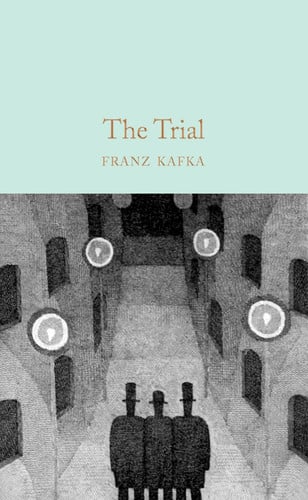
The Trial
By Franz Kafka, translated by Douglas Scott and Chris Waller
Macmillan Collector’s Library, London, 2020
First published in 1925
Franz Kafka was born in Prague in 1883 into a well-to-do German-speaking Jewish family. He trained as a lawyer and worked at several insurance companies. He died in 1924 near Vienna after a 7-year struggle with tuberculosis. Much of his work was published posthumously by his friend Max Brod who thankfully ignored Kafka’s wish that all his unpublished writing be destroyed upon his death.
Prague is very proud of its native son. There’s Franz Kafka Square in the Old Town, and the little cottage at 22 Golden Lane, just outside Prague Castle, where he lived and wrote for about a year late in his life. And then there are the statues.
I spent several lovely days in Prague this summer. I’d been there twice before, most recently about 25 years ago. It was wonderful to be back. The city retains its old-world charm but it’s also bustling and modern and, sigh, filled with tourists like me. Looking for a souvenir, I bought a copy of The Trial at the Academia bookstore on Wenceslaus Square which has an excellent selection of English-language books.
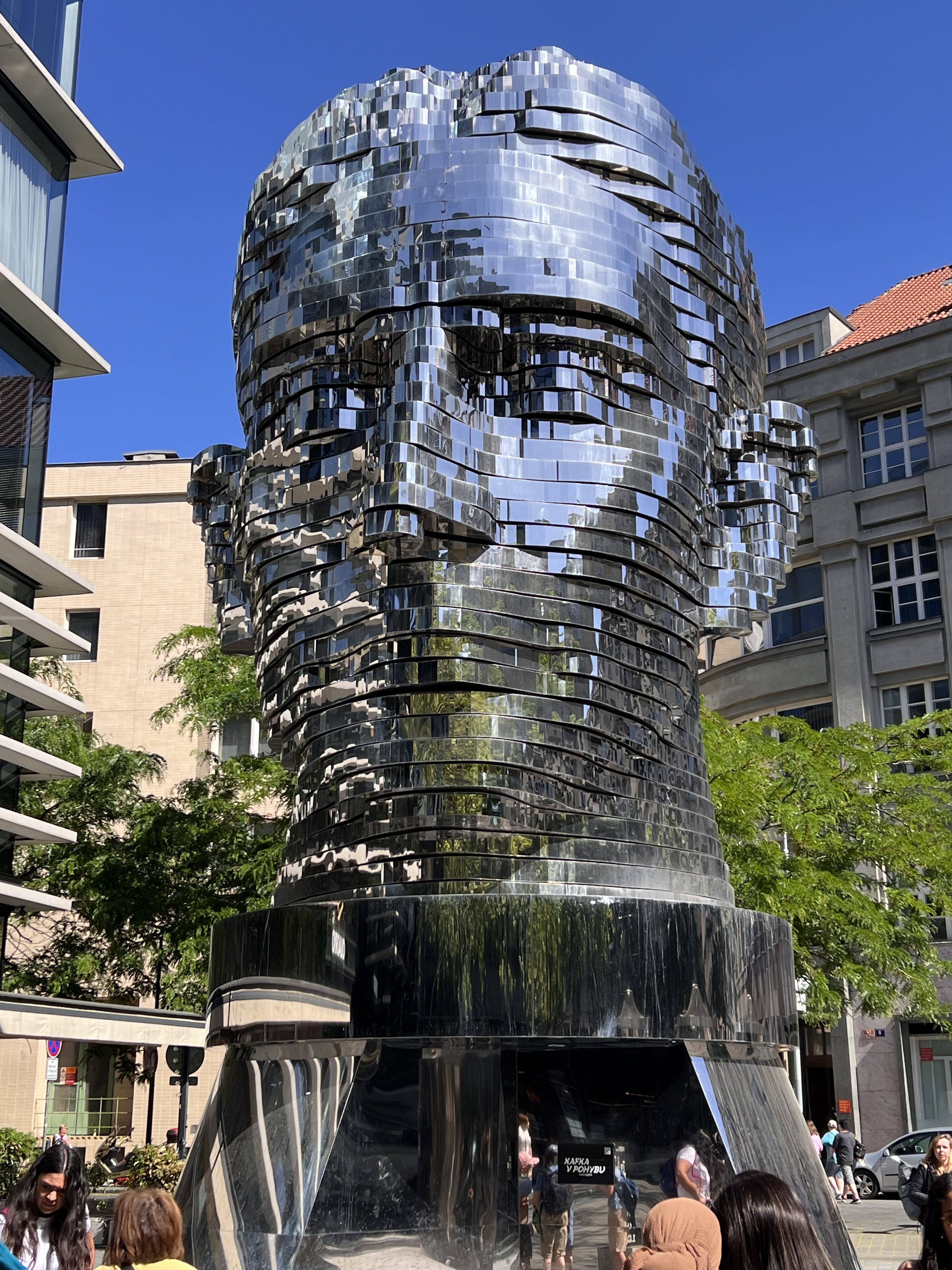
Photo: Harry Katz
Josef K never finds out why he was arrested, who denounced him, or what crime his is charged with. Everyone he meets is somehow aware of his case, but no one can tell him anything concrete about it.
The Court apparatus seems to be omnipresent, operating behind random office doors or in the claustrophobic attics of shabby tenement buildings. Yet Court officials are as uninformed about his case as he is.
K gradually learns there are two ways to approach his defense, either by dealing directly with the Court, or through intermediaries who may have some influence with the judges. Both channels are equally opaque, time-consuming and unpredictable. He becomes increasingly preoccupied and distracted by his case, unable to keep up with his job as Senior Clerk at a bank. In the end, he meekly surrenders to his fate.
Towards the end of the book, K encounters a priest, the prison chaplain, who tells him he doesn’t have to accept everything as true; he only has to accept it as necessary. K rejects this, saying:
“The lie has become the order of the world.” [p. 265]
This was the most striking line in the book for me. All societies require some degree of order to function. That order is often based on a lie, or myth if you prefer, like “the divine right of kings” or “liberty and justice for all.” Sometimes it’s called a “noble lie.” We don’t have to accept it as true, we only have to accept it as necessary. Yet all too often, all too easily, order changes into oppression. We are never far from the world of The Trial.
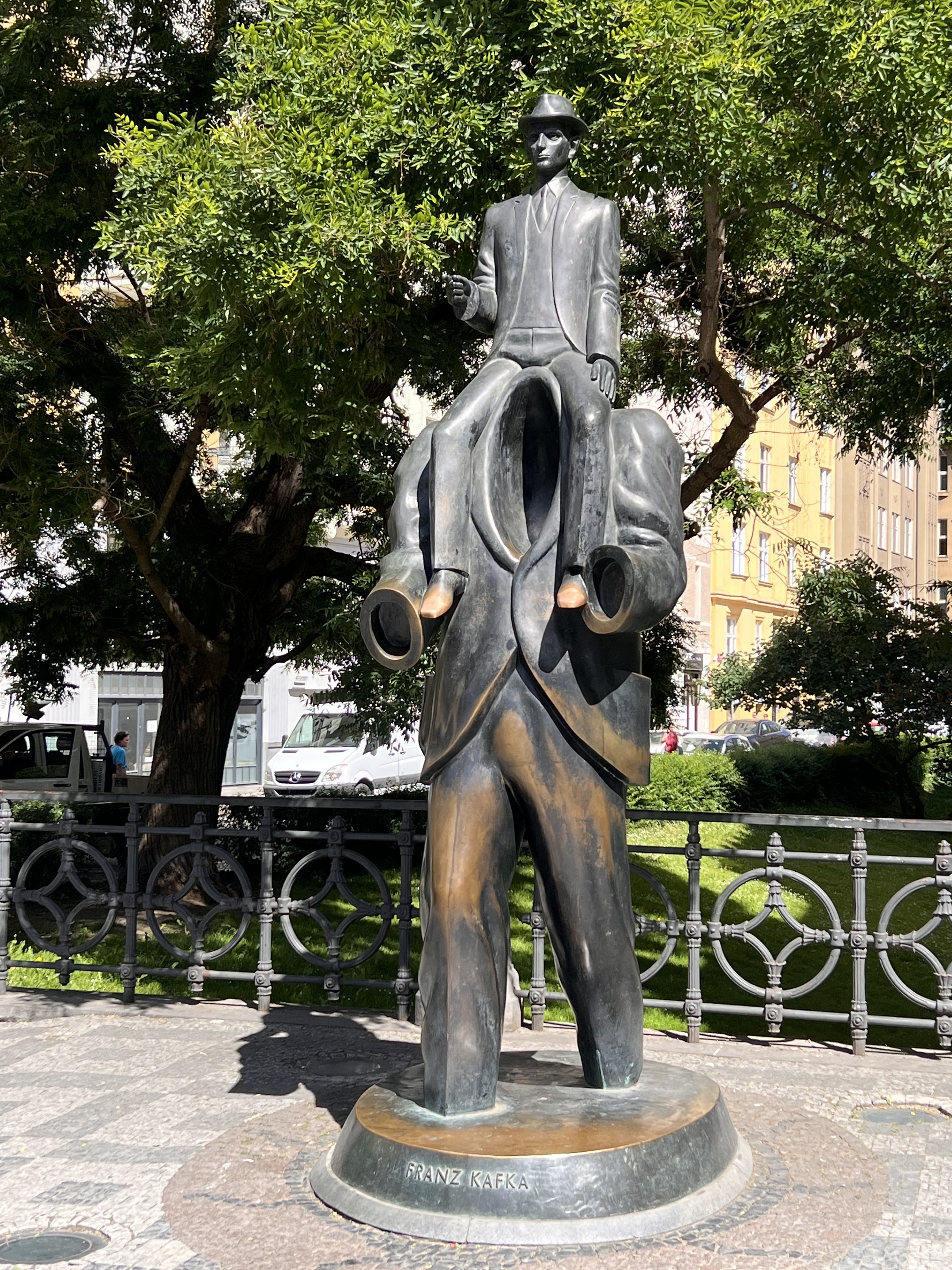
Photo: Harry Katz
It’s horrifying to imagine how easily our own lives could be ensnared by today’s bureaucratic machinery, even without being charged with a crime. Just think about dealing with your health insurance provider over a disputed claim, trying to get your credit score corrected, applying for government assistance, or (perish the thought!) running afoul of immigration authorities in any country. Engaging even briefly with these organizations gives us a glimpse of the hidden forces that eventually crush Joseph K and could overwhelm us too.
And it’s going to get a lot worse as AIs start making life-altering decisions. How can you possibly dispute “super-intelligence?”
The lie becoming the order of the world.
All this makes The Trial as relevant today as it was when first published in 1925.
Thanks for reading.
Discover more from Unsolicited Feedback
Subscribe to get the latest posts sent to your email.


