
It’s already Week 4 of Nonfiction November. Where does the time go? This week’s topic is Mind Openers hosted by Rebekah @ She Seeks Nonfiction. Special thanks to Rebekah for designing the terrific graphics for Nonfiction November again this year!
One of the greatest things about reading nonfiction is the way it can open your eyes to the world around you–no plane ticket required. What nonfiction book or books have impacted the way you see the world in a powerful way? Is there one book that made you rethink everything? Is there a book that, if everyone read it, you think the world would be a better place?
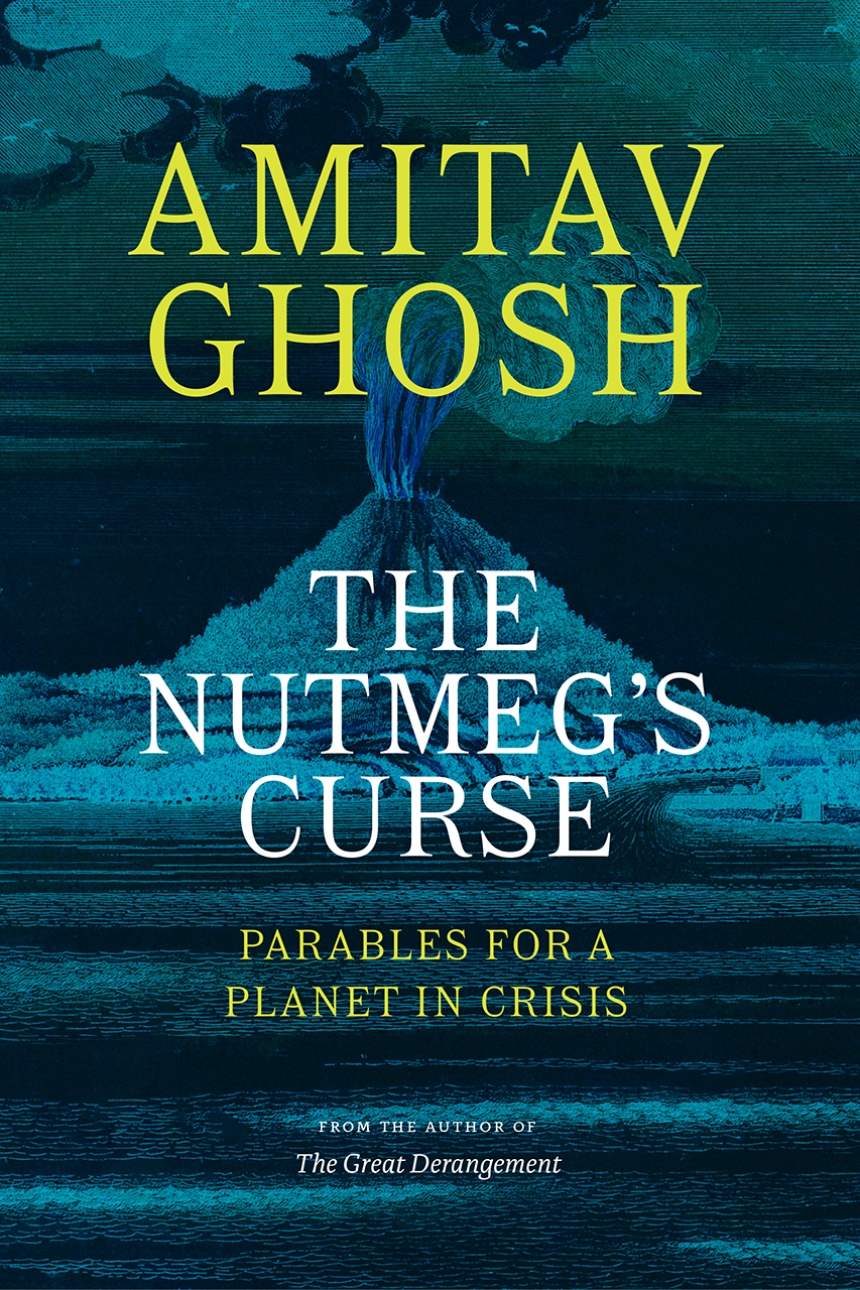
The Nutmeg’s Curse by Amitav Ghosh certainly had a powerful impact on me. (Links point to my reviews.) Ghosh traces the origins of today’s climate crisis back to European colonialism and its beliefs, structures and methods. He starts the book with an account of how the Dutch East India Company secured a monopoly over the worldwide nutmeg trade through acts of genocide against the people of the Banda Islands of Indonesia in the early 1600’s. The prevailing belief among European elites of that time was that the Earth was a repository of resources waiting to be extracted and exploited. Nature was inert, mute and lacking agency of its own. It certainly had no intrinsic meaning.
Too many people still think this way today. Ghosh argues that the structures of geopolitical power derived from controlling and exploiting Earth’s resources – especially fossil fuels – persist to this day and lie at the root of the climate crisis.
Large parts of this book were uncomfortable reading for me, both because the events Ghosh describes are horrific and because they forced me, a white person living in a colonized country, to confront some of my own ignorance of history. And I certainly hadn’t made the deep connection between colonialism and the climate crisis.
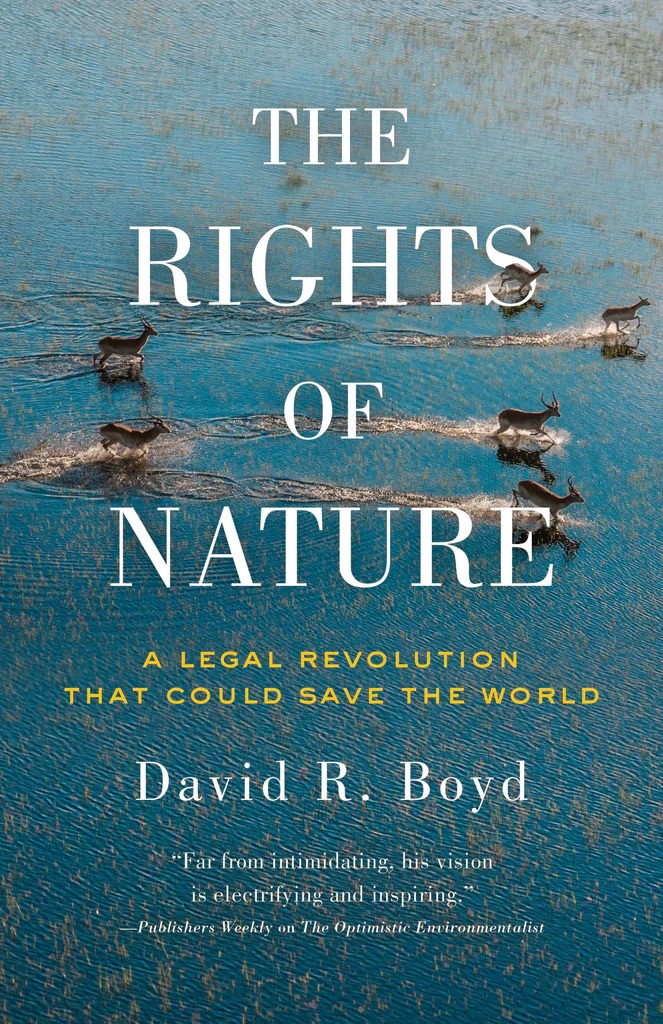
The Rights of Nature by David R. Boyd caused me to rethink, if not everything, then certainly a great deal about how we treat the natural world. Boyd argues that we should give legal rights including legal personhood, to certain parts of nature.
For example, what if we made Yellowstone National Park into a legal person, just like a corporation is a legal person? The park could then have the right to sue poachers, loggers and polluters. Sound crazy? Well, in 2017, the Parliament of New Zealand passed a law granting legal personhood to the Whanganui River. Ecuador went further. It’s 2008 constitution recognizes nature itself as a legal person and grants a list of specific rights to nature.
Boyd argues that existing environmental protection laws are inadequate. Our legal systems and practices are overwhelmingly anthropocentric. They place humans apart from and superior to nature. They regard nature and its resources as property to be exploited. As a result, the legal system is heavily tilted in favor of industrial development and resource extraction. We need stronger action to address environmental issues, and a “rights-based environmentalism” to give stronger legal backing for those actions.
A crazy idea, perhaps, but maybe it could accelerate some of the changes we need.
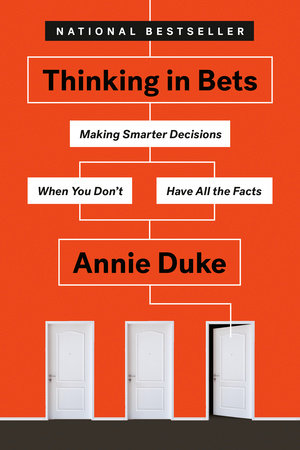
I won’t be presumptuous and say that everyone should read Annie Duke’s Thinking in Bets, or that it’ll make the world a better place. But if you do read it, you’ll improve your ability to make decisions and that’ll probably lead to improvements in your life.
Duke was a professional poker player with career winnings of over $4-million. She uses her poker playing experience to lay out a guide for consistently improving your decision-making skills. It starts, she says, with embracing uncertainty. In life, as in poker, there are many things we don’t know, can’t know, when we have to make a decision. So Duke suggests that before you make any decision you ask yourself, “wanna bet?” Her book gives you tools and strategies for identifying the possible outcomes of each decision and assessing the likelihood that each outcome will actually occur. Thinking about each decision as a bet, and then refining your abilities as you observe the actual outcomes will help you improve your decision-making and maybe your life over time.
Some of the books I highlighted in my earlier Nonfiction November posts would be great for this topic too, but I didn’t want to repeat myself. So please check out those posts for more suggestions.
Thanks for reading.
Discover more from Unsolicited Feedback
Subscribe to get the latest posts sent to your email.


 Unsolicited Feedback
Each of these sounds fascinating. I’ve heard views similar to those in your first two books, often from Indigenous authors – that things we thing of as “inanimate” are actually “alive” in a sense, like rocks and water, and I admit it’s a hard one for me to grasp.
LikeLiked by 1 person
I agree. A few books I’ve read in the last couple of years have referred to Indigenous ideas about our relationship with nature but I need to learn more.
LikeLike
Exploiting Earth’s resources is something that, unfortunately, many people never stop to consider (and I was late to the game, admittedly). Also unfortunately, we all pay the price for that.
I’ve probably had Thinking in Bets on my to-read list since it was first published but I still haven’t read it. Moving it up higher on my list now.
LikeLiked by 1 person
I hope you enjoy it!
LikeLike
Really interesting choices there. The comment about Indigenous thinking reminds me I really need to actually read Braiding Sweetgrass rather than keeping it on my Kindle unread!
LikeLiked by 1 person
Thanks, Liz. I should read that one too.
LikeLiked by 1 person
Pingback: NonFiction November 2024 Week 5 - headsubhead.com
Just reading about The Rights of Nature and The Nutmeg’s Curse shows me how much these two books might change a person’s worldview.
LikeLiked by 1 person
THINKING IN BETS sounds like something I should check out. I was about to comment that I read a book a few years ago on a similar topic called HOW TO DECIDE – turns out that was also written by Annie Duke, haha.
LikeLiked by 1 person
🙂 She’s written a couple of books. I would guess you only need to read one of them to get the core ideas.
LikeLiked by 1 person