
The topic for Week 4 of Nonfiction November is Diverse Perspectives. Rebekah @ She Seeks Nonfiction is hosting. Here’s the prompt:
Nonfiction books are one of the best tools for seeing the world through someone else’s eyes. They allow us to get an idea of the experiences of people of all different ages, races, genders, abilities, religions, socioeconomic backgrounds, or even just different opinions than ours. Is there a book you read this year from a diverse author, or a book that opened your eyes to a perspective that you hadn’t considered? How did it challenge you to think differently?
I’ve already written about Medicine Wheel for the Planet in Week 2. It’s a book about Indigenous forms of knowledge and how they differ from, but can complement, Western science.
So, this week I’m going to highlight Is a River Alive? by Robert Macfarlane.
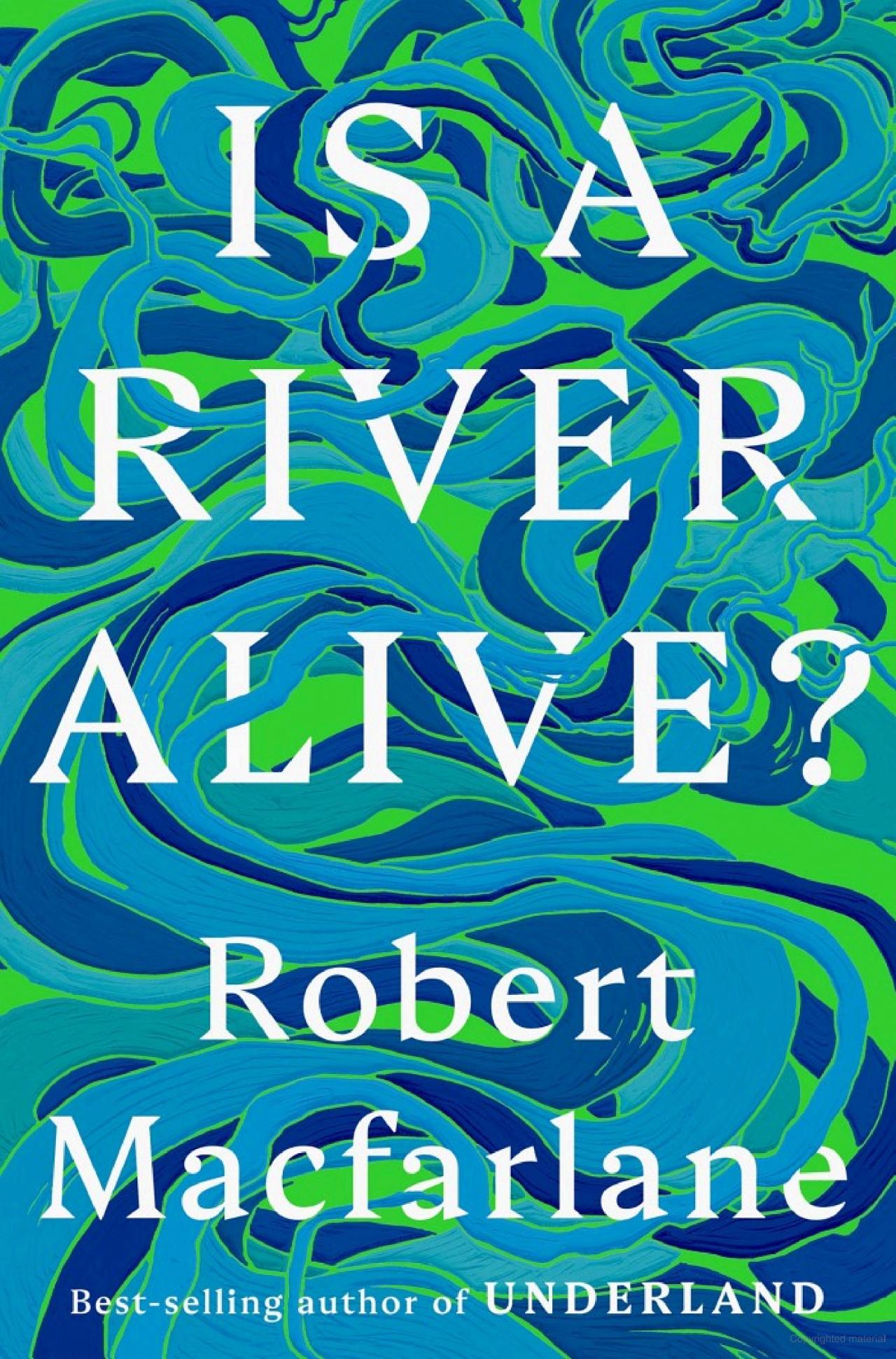
Is a River Alive? is a journey into an idea that Macfarlane says changes the world: the idea that rivers are alive. The book explores what it might mean for our relationship with nature, for our laws, economies and societies if we took this idea seriously. You can read my full review here.
For people in the “rights of nature” movement, it means that rivers and also forests, non-human species and even nature itself should be recognized as legal persons and endowed with legal rights such as the rights to exist, flourish and regenerate.
One thing is certain: thinking about the aliveness of rivers forces to us broaden our concept of life itself. If rivers are alive, then they’re a form of life very different, even alien, from our own, a form of life that’s not “contained within a in skin-sealed singleton.”
Macfarlane tackles these questions and many others as he explores rivers in three very different landscapes: the Rio Los Cedros (River of the Cedars) located in the Los Cedros cloud-forest in Ecuador; the rivers and lagoons of the Indian city of Chennai; and the Mutehekau Shipu or Magpie River in the Nitassinan region of northern Quebec. His writing is fantastic.
In Is a River Alive? Macfarlane shows us a new perspective for seeing, understanding and interacting with the Earth and with life itself. It offers a new way to hope.
As Macfarlane says, “hope is the thing with rivers.”
Thanks for reading.
Discover more from Unsolicited Feedback
Subscribe to get the latest posts sent to your email.


 Unsolicited Feedback
When you grow up and live around a river and on it, you do get the idea that it is a living entity. I grew up around the St. Johns River, that flows through Jacksonville, Florida, my home town. My husband, who also grew up around and on the river, was given his father’s boat, and we had many hours on the St. Johns. It is one of the two large navigable rivers in the world that flow north, the other being the Nile. It is very wide — three to five miles at some points — an artery of commerce in northeast Florida. It is also a Mecca of recreation. It has many tributaries along its route, famous for fishing and excellent for water skiing, for those who can do that. I tried to learn to water ski when I was about ten years old, and just could not get the hang of it. Yeah, rivers are living things.
LikeLiked by 1 person
Thanks for sharing your lovely recollections. My own direct experiences with rivers have been far fewer but I agree they give you the feeling you’re in the presence of a living force.
LikeLike
I’m adding this to my TBR, thank you.
I live on the Manning River (in NSW Australia), it’s the only double delta river in the southern Hemisphere and the only permanent multiple entrance river in the world other than the Nile in Egypt.
https://oroh.com.au/our-rivers/manning-river/
Happy nonfiction November!
LikeLiked by 1 person
I’ve seen the Murray but not the Manning. Hope you enjoy the book!
LikeLiked by 1 person
I love nature nonfiction, so this sounds fascinating. Thanks for the review.
LikeLiked by 1 person
I sometimes think about trees being alive as cogiant beings. They just communicate at such a low and slow rate we can’t hear them. It changes everything about the way we treat the earth, I think.
My Week 4 post: https://headfullofbooks.blogspot.com/2025/11/nonfiction-november-week-four-diverse.html
LikeLiked by 1 person
Trees do communicate with each other! You might enjoy Finding the Mother Tree by Suzanne Simard.
LikeLike
I remember you reviewing this book earlier and being intrigued then. But it slipped out of sight for me, so I just now added it to my hold list from the library. I’d like to read it before the year ends as a closing book for my year with Ripple. 🙂
LikeLiked by 1 person
I think it fits very well with Ripple. Hope you enjoy it.
LikeLike
Oh my. I think I need to move this book up on my list for next year. Thank you!
LikeLiked by 1 person
I hope you enjoy it!
LikeLike
I have another book by this author on my shelf to be read (The Old Ways), but I think I might need to move it up the priority list so I can justify getting my hands on this book as well!
LikeLiked by 1 person
He’s written several books. This is the only one of his that I’ve read … so far. 🙂
LikeLiked by 1 person
This makes sense to my non-legal brain. I mean if a corporation can (at times) be seen as a legal identity and then other times not, why not something as important as the waterways? Can you imagine the impact on all those “water rights” cases in the American West as towns/counties/states fight over the drinking water? Whatever the outcome would be, it’d be worth it. Also – that is a beautiful cover.
LikeLiked by 1 person
Oh yes! There was a water rights case involving the Yakima River in Washington where I live that took 40 years to adjudicate. And that’s a cakewalk compared to the Colorado. Legal rights for rivers would certainly add an interesting twist!
I agree about the cover too.
LikeLiked by 1 person
Pingback: November 2025 happened… new to the TBR stack | booksaremyfavouriteandbest
I’ve got hold of a copy of this one – so I’m very heartened about your positive review. And given how crucial rivers are to all eco-systems, it’s an increasingly strong argument:).
LikeLiked by 1 person
Thanks for stopping by and taking the time to comment. I hope you enjoy the book. It’s true – rivers are crucial!
LikeLike