
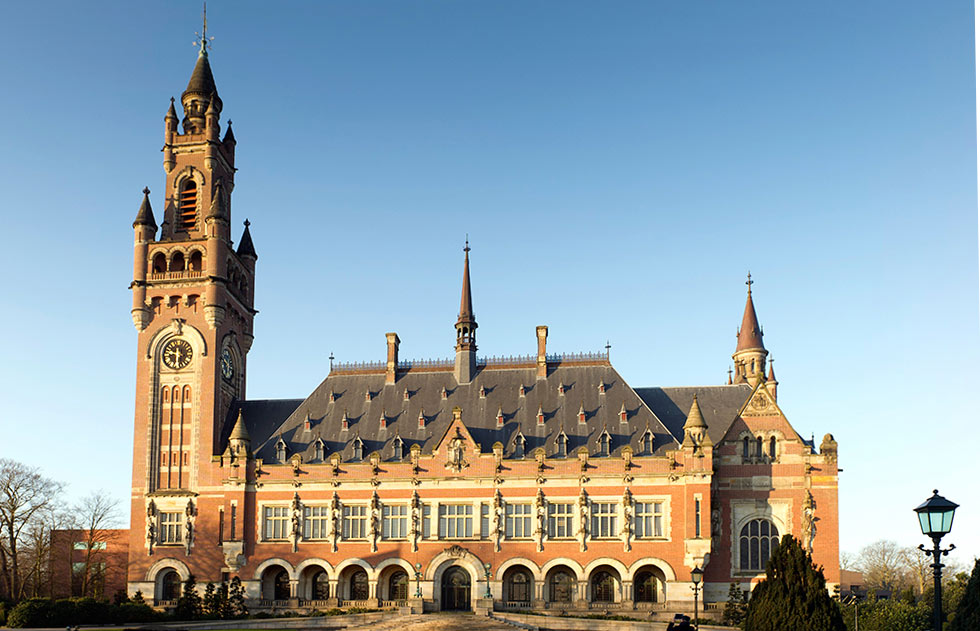
There was a small glimmer of good news on climate change last week, so small you might have missed it. On March 23, 2025, the International Court of Justice (ICJ), the highest judicial body of the United Nations, ruled that climate change is an “urgent and existential threat” and that nation states have legal obligations under both climate treaties and customary international law “to ensure the protection of the climate system and other parts of the environment from anthropogenic greenhouse gas emissions.”
In its ruling, titled Obligations of States in Respect of Climate Change, the court also said that failure of a country to meet these obligations constitutes an “internationally wrongful act” that could require “full reparations to injured States …” [¶ 457]
This means that even member States that have not signed, or have withdrawn from, international climate treaties like the Paris Agreement, still have obligations under international law to address climate change in their territory. Specifically, the court said that
“States have a duty to prevent significant harm to the environment by acting with due diligence and to use all means at their disposal to prevent activities carried out within their jurisdiction or control from causing significant harm to the climate system and other parts of the environment …” [¶ 457]
The court also drew a clear link between climate change and human rights, saying that the adverse effects of climate change impair the enjoyment of human rights [¶ 373] and that “protection of the environment is a precondition for the enjoyment of human rights.” [¶ 373] The court concluded that “under international law, the human right to a clean, healthy and sustainable environment is essential for the enjoyment of other human rights.” [¶ 393]
You can read the court’s full ruling here, and all documents related to this case here.
Background
This case was sparked by law students from Vanuatu and several other small-island nation states whose very existence is threatened by rising sea levels caused by anthropogenic climate change. It took a couple of years of campaigning, but on March 29, 2023, the UN General Assembly passed Resolution 77/276 asking the ICJ for an advisory opinion on these questions:
“(a) What are the obligations of States under international law to ensure the protection of the climate system and other parts of the environment from anthropogenic emissions of greenhouse gases for States and for present and future generations;
(b) What are the legal consequences under these obligations for States where they, by their acts and omissions, have caused significant harm to the climate system and other parts of the environment, with respect to:
(i) States, including, in particular, small island developing States, which due to their geographical circumstances and level of development, are injured or specially affected by or are particularly vulnerable to the adverse effects of climate change?
(ii) Peoples and individuals of the present and future generations affected by the adverse effects of climate change?”
An advisory opinion means it’s non-binding. This might seem a little strange to American readers because courts in the US do not issue advisory opinions. US courts only hear “live cases and controversies” but courts in other countries may also rule on hypothetical or theoretical legal questions. In Canada, for example, they’re called reference questions.
In this case, the 15-judge panel issued a unanimous opinion, only the fifth time in its 80-year history that the court has issued a unanimous advisory opinion.
Likely Impact
OK, so does an advisory opinion carry any weight or is it just symbolic?
In the US, this case may not have much direct impact, and certainly none while Donald Trump is president. In general, the US doesn’t always abide by ICJ decisions it doesn’t like, and US courts tend not to give much weight to international laws or cases in their rulings
In other countries, the impact may be greater. It’s clear that most countries around the world are not doing enough to fight climate change. Citizens in many places, often led by young people, are suing their governments to take more action. The ICJ’s decision here will strengthen their efforts and will almost certainly be cited to provide justification.
It may also strengthen calls for climate reparations, also known as compensation for “loss and damage” from developed countries that have historically emitted the most carbon dioxide to less developed countries that are suffering from the effects of climate change which they did not cause.
I like the fact that the court said the obligation to address climate change comes not just from climate-specific treaties but also from other UN agreements and from “customary international law.” This means the US can’t renege on its obligations by just withdrawing from the Paris Agreement.
Over 100 countries participated in oral hearings before the ICJ in The Hague in December 2024 and more countries made written submissions. The Biden Administration, to its shame in my opinion, took the position that international climate treaties were sufficient to address climate change and that the court should refrain from ruling in this case. Given that Trump has once again withdrawn the US from the Paris Agreement, it’s a good thing the court did not agree. My point here is that all these countries took the time and effort to participate. They wouldn’t have done so if they thought the case or the IJC itself was unimportant. So, yes, the results may be partly symbolic, but the symbolism is important, and all these countries, including the US, recognize that.
Like I said, a small glimmer of good news, but worth celebrating.
Thanks for reading.
If you enjoyed this post, please subscribe to Unsolicited Feedback.
Related Links
Karen Zraick and Marlise Simons. “Top U.N. Court Says Countries Must Act on Climate Change.” New York Times, 23 July 2025, https://www.nytimes.com/2025/07/23/climate/icj-hague-climate-change.html.
Somini Sengupta. “Does the World Court’s Sweeping Climate Opinion Matter? Five Takeaways.” New York Times, 23 July 2025, https://www.nytimes.com/2025/07/23/climate/icj-world-court-climate-opinion-takeaways.html.
Bob Berwyn, Katie Surma. “Governments Are Legally Required to Address Climate Change, Top Global Court Says.” Inside Climate News, 23 July 2025, https://insideclimatenews.org/news/23072025/icj-rules-governments-are-legally-required-to-address-climate-change/.
Maria Antonia Tigre, Maxim Bönnemann and Antoine De Spiegeleir. “The ICJ’s Advisory Opinion on Climate Change: An Introduction.” Climate Law, Sabin Center for Climate Change Law, Columbia Law School, 24 July 2025, https://blogs.law.columbia.edu/climatechange/2025/07/24/the-icjs-advisory-opinion-on-climate-change-an-introduction/.
Discover more from Unsolicited Feedback
Subscribe to get the latest posts sent to your email.


 Unsolicited Feedback
I vaguely remember seeing this ruling a few weeks ago in a climate newsletter. It’s nice to be reminded of it tonight in light of Trump’s continual deletion of more and more environmental data. I’m hoping other countries around the world can pick up the pace making positive changes while we drag our feet over here to move backwards.
LikeLiked by 1 person
Pingback: The EPA’s “Dagger to the Heart” of US Climate Regulation | Unsolicited Feedback