
Trump signed a blizzard of executive orders (EOs) over the last week. Some of them are vicious and cruel (rolling back protections for transgender people), and others are blatantly unconstitutional (ending birthright citizenship). In this post, I’m going to look at the executive orders that affect US government policy on climate change since that’s my main area of interest.
I wish I could say these EOs are just “sound and fury signifying nothing.” It’s true: most of them are full of Trump’s usual bluster and gaslighting, and many have questionable legality. But taken together they will have an impact, and not a good one, on the climate in the US and around the world. Unfortunately, none of this is any surprise. Trump campaigned on rolling back the Biden Administration policies on climate change. Now he’s starting to do it.
They say elections have consequences. Future generations will pay the price for this one.
What an EO can do, and what it can’t
First, what exactly are executive orders, and what can presidents accomplish with them?
Basically, an EO is an order from the president telling officials in the executive branch how to implement administration policy. Presidents usually sign hundreds of them during their time in office. EOs do not require approval from Congress or the courts.
However, EOs must be consistent with the Constitution, and with existing laws and regulations. EOs cannot create new laws or regulations, or override existing ones, let alone amend the Constitution. EOs that attempt to do any of these things will likely get challenged in court. So, just because Trump scrawls his name on an EO doesn’t mean it will stick.
However, one thing presidents can do is revoke or rescind the EOs of previous presidents. Presidents of both parties seem to relish doing this immediately upon taking office. As a result, EOs are not durable. They can be issued with the stroke of a Sharpie, and just as easily canceled. Easy come, easy go.
OK, let’s look at the EOs affecting climate change policy, starting with the simplest.

Withdrawing from the Paris Agreement
As expected, Trump has withdrawn the US from the Paris Agreement. Again. You probably recall that he withdrew in 2017 when he took office the first time. Biden rejoined in January 2021, and now, tit-for-tat, Trump has withdrawn again.
The EO, titled PUTTING AMERICA FIRST IN INTERNATIONAL ENVIRONMENTAL AGREEMENTS (I’m not sure why they’re in all-caps), contains a statement of purpose that begins with:
“The United States must grow its economy and maintain jobs for its citizens while playing a leadership role in global efforts to protect the environment.”
It goes on to state that the policy of the Administration is to:
“… put the interests of the United States and the American people first in the development and negotiation of any international agreements with the potential to damage or stifle the American economy. These agreements must not unduly or unfairly burden the United States.”
It then instructs the US Ambassador to the United Nations to submit the necessary paperwork to the UN withdrawing from the Paris Agreement.
Sigh. Where to begin?
First, how is the US supposed to achieve the stated purpose of “playing a leadership role in global efforts to protect the environment” by withdrawing from the world’s most important global agreement on protecting the environment?
Under the Paris Agreement, every country, the US included, sets its own targets for reducing greenhouse gas emissions. These targets are known as Nationally Determined Contributions (NDCs). They are voluntary, not legally binding, unenforceable and can be changed at any time for any reason. So, the suggestion that they “unduly or unfairly burden the United States” is ridiculous.
The net effect of this EO, apart from shredding what little credibility the US may have left on international climate cooperation, will be to give up leadership to other countries, most likely China. How is that putting the interests of the United States and the American people first?
The Paris Agreement has many shortcomings. The annual Conference of the Parties (COP) has become a dysfunctional circus. We’re nowhere close to limiting global warming to 2.0°C, let alone 1.5°C. The whole enterprise is ripe for serious reform and strengthening. But storming off the field, like a five-year-old throwing a temper tantrum, isn’t leadership. It’s just stupid.
On the other hand, as political scientist David Victor suggests, the rest of the world may be better off with the US out of the Paris Agreement. Diplomats are more likely to cooperate and make progress without Trump officials poisoning the waters.
Halting wind power projects
The only thing you need to know about the TEMPORARY WITHDRAWAL OF ALL AREAS ON THE OUTER CONTINENTAL SHELF FROM OFFSHORE WIND LEASING AND REVIEW OF THE FEDERAL GOVERNMENT’S LEASING AND PERMITTING PRACTICES FOR WIND PROJECTS is that Trump hates wind power. That’s because the government of Scotland approved construction of an offshore wind farm within view of one of Trump’s golf courses. He’s been in a snit about wind ever since.
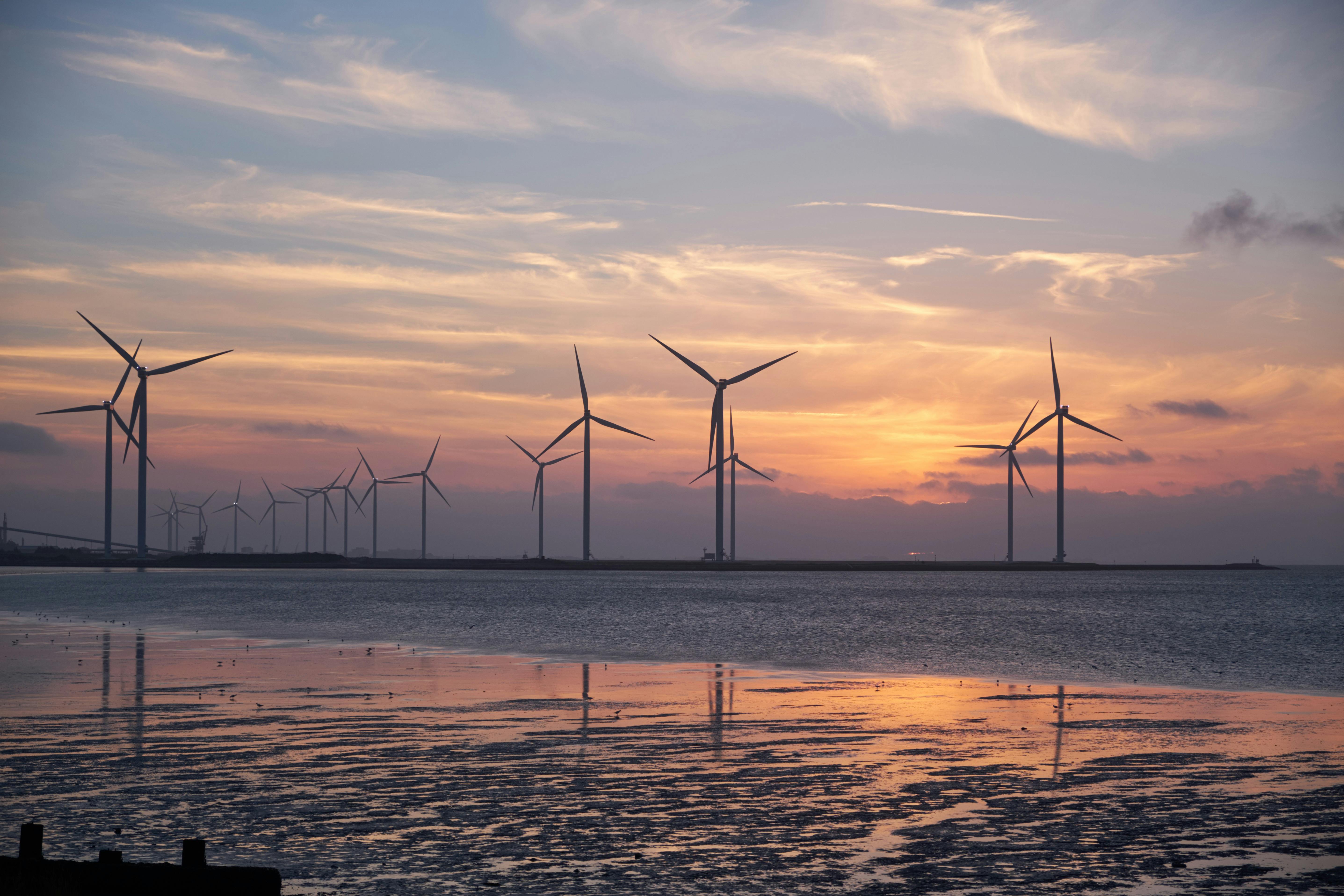
In this EO, Trump has withdrawn all areas of the Outer Continental Shelf from leasing for wind projects. Although it says “temporary” there’s no timeline so the order will remain in force until it is revoked, probably by the next Democratic president. He’s also ordered “a comprehensive assessment and review of Federal wind leasing and permitting practices” for both onshore and offshore wind projects.
This order – it’s technically a presidential memorandum rather than an executive order, but tomayto, tomahto – does not stop offshore wind projects that have already been granted permits. However, any new or un-permitted projects look like they’re not going anywhere while Trump is in office. It also does not affect projects in state-controlled coastal waters which extend from three to nine nautical miles offshore, depending on the state.
The impact on onshore wind development is less clear. Projects on federal land will certainly be halted until the review is completed, but what about projects on state and private land? Who knows? One report from Heatmap Plus suggests that more than half of all new wind projects could be impacted. I suspect this will turn out to be a shakedown. Trump is transactional after all. It wouldn’t surprise me if well-placed political contributions from wind power developers lubricated the review and permitting process for their projects.
Still, hitting pause on wind power will be very hard on people employed in that industry, offshore wind in particular. And of course, it’s a huge setback for the transition to clean energy. Overall, it makes no sense, especially since wind is one of the cheapest and fastest growing sources of electricity, particularly in red states like Texas and Iowa.
And, hey, aren’t we supposed to be in the middle of a national energy emergency?
Declaring an energy emergency
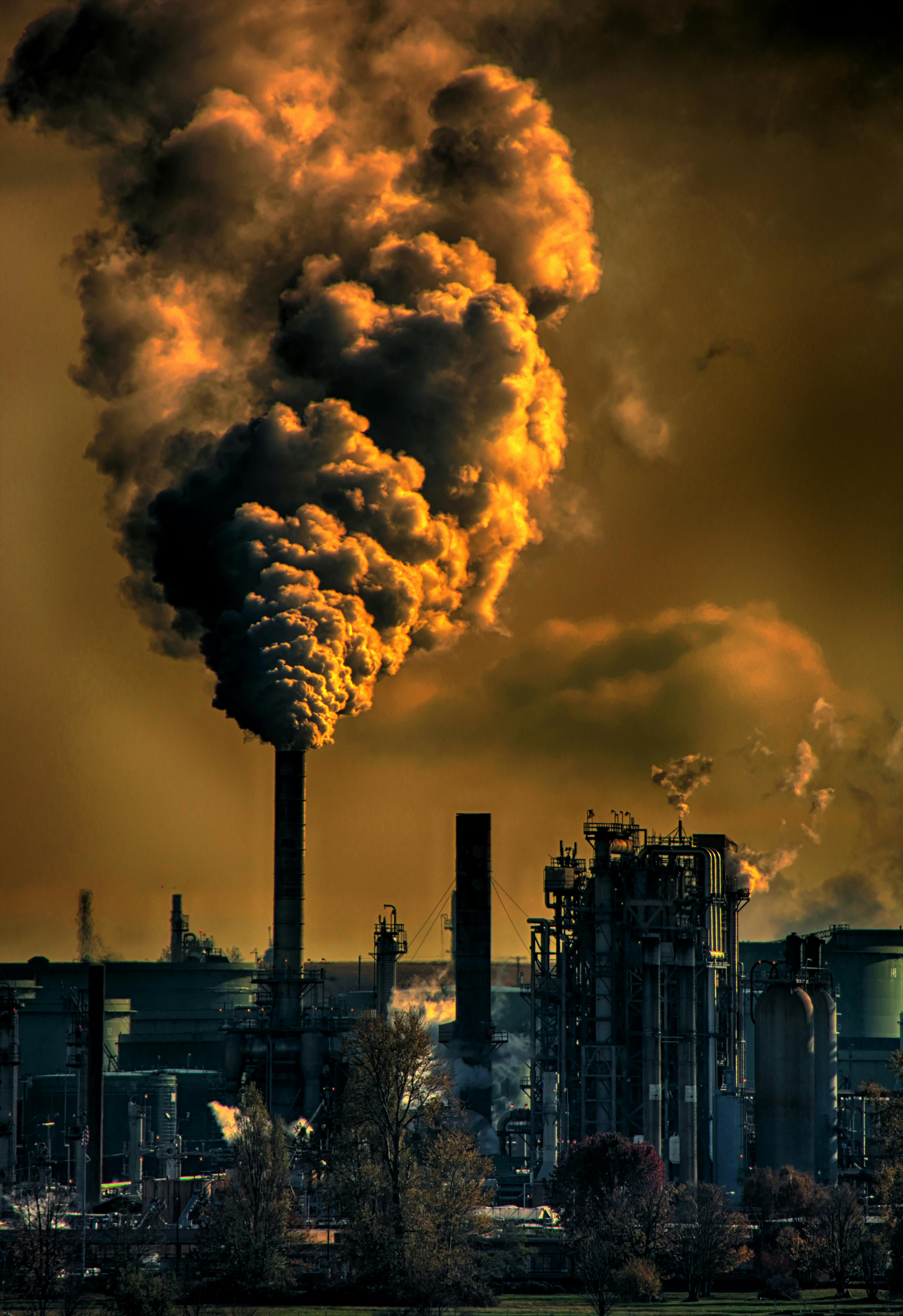
On the surface, Trump’s executive order DECLARING A NATIONAL ENERGY EMERGENCY is about speeding up the process for reviewing, permitting and building energy projects around the country. By declaring a national emergency, the Administration can legally short circuit some of the environmental reviews and other administrative procedures that are normally required.
To be sure, the US does face some significant problems in the energy sector. Demand for electricity is growing faster than it has in decades due to electric vehicles, electrification of home and commercial heating, electrification of industrial processes and the construction of data centers. Our electrical grid lacks the capacity to support this new demand and the reliability to withstand increasingly severe storms and fires brought on by climate change. Permitting and review processes are too slow, making it difficult to build new transmission lines and connect new energy sources to the grid.
However, one thing that is not a problem is production of oil and gas. The US is producing “more crude oil than any country, ever.” Natural gas production is at or near record levels too.
The true intent of this EO becomes clear once you read how it defines “energy” and “energy resources.” They’re defined as “crude oil, natural gas, lease condensates, natural gas liquids, refined petroleum products, uranium, coal, biofuels, geothermal heat, the kinetic movement of flowing water, and critical minerals.”
The definition excludes solar, wind and battery power. It also excludes hydrogen.
So, Trump is declaring a national emergency to speed up energy projects but he’s excluding the cheapest and cleanest sources of energy, the ones that are critical to reducing greenhouse gas emissions and slowing climate change.
Yup, it’s “drill, baby, drill.”
Some of this may get challenged in court once agencies start taking concrete actions under the emergency declaration. But courts usually become supine whenever the government mentions “national security” or “national emergency”, so I don’t expect much pushback here.
Unleashing American Energy
Apparently declaring a national energy emergency isn’t enough, so Trump issued another EO, UNLEASHING AMERICAN ENERGY. This one is the longest. It calls for eliminating the “electric vehicle (EV) mandate,” and terminating the “Green New Deal,” neither of which actually exist. It asks agencies to review any actions or regulations that might place an undue burden on “oil, natural gas, coal, hydropower, biofuels, critical mineral, and nuclear energy resources,” again omitting solar, wind and batteries. It also seeks to safeguard Americans’ precious freedom to choose their toilets and shower heads. But what it mainly does is instruct government agencies to review existing programs and regulations, consider various actions, make proposals and submit reports. The intent is clear. This EO is about dismantling the Biden Administration’s progress on climate change. In fact, if fully implemented, it would undo decades of progress.
I won’t go through the whole EO since it’s so long. I’ll just highlight some particularly troubling provisions from Section 6, “Prioritizing Accuracy in Environmental Analyses.” The title is another piece of gaslighting.
Section 6(c) orders the EPA Administrator to consider eliminating calculations of the social cost of carbon from any of its regulatory and permitting decisions. The social cost of carbon is the dollar cost to society of each additional ton of carbon emissions, or the dollar benefit of each ton of emissions avoided or reduced. Today, the EPA factors the social cost of carbon into its regulatory and permitting decisions. This doesn’t actually put a price on carbon, as many people including me favor, but it at least gets the EPA considering the impact of carbon pollution. Trump clearly wants to put a stop to that.
Section 6(f) of the EO orders the EPA Administrator to submit recommendations on:
“the legality and continuing applicability of the Administrator’s findings, ‘Endangerment and Cause or Contribute Findings for Greenhouse Gases Under Section 202(a) of the Clean Air Act,’ Final Rule, 74 FR 66496 (December 15, 2009).”
This probably seems really obscure, but it’s actually a dagger to the heart of all federal regulations concerning greenhouse gas emissions. 74 FR 66496 is a 2009 “endangerment finding” by the Environmental Protection Agency that “six greenhouse gases taken in combination endanger both the public health and the public welfare of current and future generations.” The six greenhouse gasses include carbon dioxide, methane and nitrous oxide. It also says that “the combined emissions of these greenhouse gases from new motor vehicles and new motor vehicle engines contribute to the greenhouse gas air pollution that endangers public health and welfare.” This finding provides the legal foundation for the EPA to regulate greenhouse gas emissions. By ordering the EPA to reconsider this finding, Trump is trying to undermine the Agency’s ability to do that.
Now back in 2009, there was compelling scientific evidence that human-generated greenhouse gas emissions are causing climate change and that they threaten human health and well-being. Since then, the scientific evidence has only grown stronger, more extensive and more accurate. So, the finding should eventually be confirmed, but it will take time and most likely litigation.
Taken together, these EOs represent a complete about face on US climate policy. They will increase long term demand for fossil fuels. They will likely slow, although not stop, the transition to clean energy. They are an abdication of US global leadership and a rejection of overwhelming scientific evidence.
Many provisions of these EOs may never lead to concrete action by the US government. They may be stopped or curtailed by litigation. But fighting in court takes a long time. And it’s expensive. The net effect will be to create doubt and delay, which is exactly the playbook the fossil fuel industry has been following for decades. Just like the tobacco industry before it.
I’ve seen estimated that the fossil fuel industry contributed between $219-million and $450-million to help elect Trump and other Republicans in the 2024 election cycle. It looks like they got the government they paid for.
Thanks for reading.
If you enjoyed this post, please subscribe to Unsolicited Feedback.
Related Links
Withdrawing from the Paris Agreement
Biniaz, Sue. “What Just Happened: Withdrawing from Paris and other International Environmental Agreement Actions.” Just Security, 21 Jan 2025, https://www.justsecurity.org/106621/withdrawing-paris-environmental-agreement-actions/
Victor, David G. “How the world will weather Trump’s withdrawal from global agreements.” Nature 635, 526 (2024), doi: https://doi.org/10.1038/d41586-024-03755-x.
Halting wind power projects
Fieseler, Clare. “‘Scare tactics’ and uncertainty: What Trump’s offshore wind order means.” Canary Media, 22 Jan 2025, https://www.canarymedia.com/articles/offshore-wind/scare-tactics-and-uncertainty-what-trumps-offshore-wind-order-means.
Greene, Nathanael. “Trump Spits into the Wind.” NRDC, 23 Jan 2025, https://www.nrdc.org/bio/nathanael-greene/trump-spits-wind.
Holtzman, Jael. “Trump’s Wind Order Could Hit ‘More Than Half’ of New Projects.” Heatmap Plus, 23 Jan 2025, https://heatmap.news/plus/the-fight/spotlight/trump-executive-order-wind.
Peters, Adele. “Why Donald Trump hates wind power.” Fast Company, 22 Jan 2025, https://www.fastcompany.com/91264701/why-donald-trump-hates-wind-power.
Declaring an energy emergency
Brady, Jeff. “Trump’s energy emergency is a gift to fossil fuel firms. It’s likely headed to court.” NPR, 22 Jan 2025, https://www.npr.org/2025/01/22/nx-s1-5269717/trump-energy-emergency-climate.
Kreil, Erik. “United States produces more crude oil than any country, ever.” U.S. Energy Information Administration, 11 Mar 2024, https://www.eia.gov/todayinenergy/detail.php?id=61545.
Manning-Pickett, Trinity. “Five states drove record U.S. natural gas production in 2023.” U.S. Energy Information Administration, 10 Dec 2024, https://www.eia.gov/todayinenergy/detail.php?id=63964#.
Unleashing American Energy
Asdourian, Elijah and Wessel, David. “What is the social cost of carbon?” The Brookings Institution, 14, Mar 2023, https://www.brookings.edu/articles/what-is-the-social-cost-of-carbon/.
U.S. Environmental Protection Agency. “74 FR 66496 – Endangerment and Cause or Contribute Findings for Greenhouse Gases Under Section 202(a) of the Clean Air Act.” Federal Register, 74 FR 66496, 15 Dec 2009, https://www.govinfo.gov/content/pkg/FR-2009-12-15/pdf/E9-29537.pdf.
General
Climate Power. “Big Oil Spent $450 Million To Influence Trump & The 119th Congress.” 21 Jan, 2025, https://climatepower.us/research-polling/big-oil-spent-450-million-to-influence-trump-the-119th-congress/.
Dessler, Andrew. “An explanation of how renewable energy saves you money.” The Climate Brink, 27 Jan 2025, https://www.theclimatebrink.com/p/an-explanation-of-how-renewable-energy.
Gearino, Dan, et al. “Executive Orders on Energy and Climate Have Advocates Across the Nation on Edge.” Inside Climate News, 22 Jan 2025, https://insideclimatenews.org/news/22012025/trump-executive-orders-have-advocates-across-the-nation-on-edge/.
Klein, Ezra. “Don’t Believe Him.” The Ezra Klein Show, 2 Feb. 2025, https://www.nytimes.com/2025/02/02/opinion/ezra-klein-podcast-trump-column-read.html. In this episode, Ezra Klein argues that Trump is acting through executive orders because he lacks the votes in the Congress to enact legislation. It’s evidence of weakness, not strength.
Krik, Karin. “The fossil fuel industry spent $219 million to elect the new U.S. government.” Yale Climate Connection, 3 Jan 2025, https://yaleclimateconnections.org/2025/01/the-fossil-fuel-industry-spent-219-million-to-elect-the-new-u-s-government/.
Meyer, Robinson. “Trump Has Now Made His Energy Project Clear.” The New York Times, 24 Jan 2025, https://www.nytimes.com/2025/01/24/opinion/trump-energy-oil-gas-prices.html. Robinson Meyer argues that the overall purpose of Trump’s executive orders on energy is to broaden the demand and extend the lifespan for fossil fuels.
Sabin Center for Climate Change Law. “Climate Backtracker.” Columbia Law School, https://climate.law.columbia.edu/content/climate-backtracker, accessed 26 Jan 2025.
Friedman, Lisa and Tabuchi, Hiroko. “E.P.A. Targets Dozens of Environmental Rules as It Reframes Its Purpose.” The New York Times, 12 Mar 2025, https://www.nytimes.com/2025/03/12/climate/epa-zeldin-rollbacks-pollution.html.
EPA. “Trump EPA Kicks Off Formal Reconsideration of Endangerment Finding with Agency Partners.” 12 Mar 2025, https://www.epa.gov/newsreleases/trump-epa-kicks-formal-reconsideration-endangerment-finding-agency-partners. EPA press release announcing the EPA will launch a process to reconsider the 2009 endangerment finding that greenhouse gasses threaten human health and welfare and which forms the legal basis for the EPA’s regulation of greenhouse gasses.
Discover more from Unsolicited Feedback
Subscribe to get the latest posts sent to your email.


 Unsolicited Feedback
I’m glad to get your take on this. I’ve been so bothered by Trump’s rolling back the progress Biden implemented (in the midst of all the other chaos he’s brought) that I haven’t had the heart to read much about it. I am encouraged (in a weird way, but what other way is there now?) at the thought that the world might be better off without Trump in the Paris Agreement. Crazy times.
LikeLiked by 1 person
Thanks, Lisa. I’m trying to not get caught up in the day-to-day chaos too, but climate change is so important that I felt I had to dive in.
LikeLike
Pingback: What If We Get It Right? | Unsolicited Feedback