
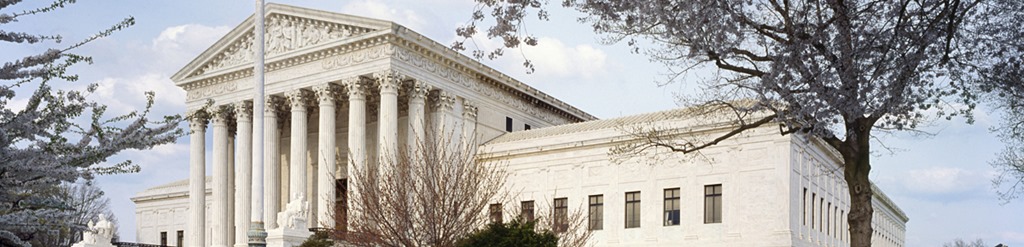
In response to the COVID-19 pandemic, the Biden Administration announced a plan to cancel up to $10,000 of student loan debt for about 43 million borrowers. Six States sued the federal government claiming that the loan cancellation plan was not authorized under the Higher Education Relief Opportunities for Students (HEROES) Act.
In a 6-to-3 judgement, split along party lines, the Supreme Court agreed and blocked the plan.
Why?
Well, basically, the majority just didn’t like it.
You can find the full text of the Supreme Court’s decision here: Biden v. Nebraska.
This is an alarming ruling for two reasons.
Standing room only
First, the case should never have been heard by the Supreme Court at all. That’s because the majority ignored its own rules about when you can bring a case before the Court.
You can’t just show up at the Supreme Court and challenge a government action or law because you don’t like it. You have to have “standing,” which means you must be able point to some specific way in which you have personally been harmed by the action or law.
If you don’t have standing, you can’t sue.
In other words, “no harm, no foul.”
At least that’s the way it used to be.
In this case, none of the six States suing the federal government should have had standing because they’re not directly harmed by student debt cancellation. Yet, writing for the majority, Chief Justice John Roberts concluded via tenuous and far-fetched reasoning that Missouri did have standing.
Missouri claimed that a state-created corporation called the Missouri Higher Education Loan Authority (MOHELA) that services federal student loans would lose revenue if student debt were cancelled. MOHELA is legally and financially independent from the State. Everyone agrees MOHELA itself could sue the federal government and that loss of revenue is exactly the kind of harm that would give it standing. But MOHELA refused to participate in the suit. In addition, since it’s a financially independent corporation, any losses MOHELA might experience would not affect the State.
So how did the Court majority figure Missouri had standing?
Essentially, the right-wing majority on the Court wanted to rule on this case, so they contorted the rules of standing to let them do so.
As Justice Kagan said in her dissenting opinion:
“In adjudicating Missouri’s claim, the majority reaches out to decide a matter it has no business deciding. It blows through a constitutional guardrail intended to keep courts acting like courts.” [Kagan dissent, p. 9]

Major questions, again
The second reason this case is alarming is because the majority blocked the debt cancellation plan under a bullshit theory known as the “major questions doctrine.” I wrote about this last year when the major questions doctrine made its official debut in a case called West Virginia v. EPA. The major questions doctrine says that if Congress had meant for some agency or department to do some really big important major thing, it would have said so explicitly in legislation. In the absence of an explicit grant of authority, the theory goes, the Courts should assume that no such authority exists.
This so-called doctrine is not part of the Constitution or any law. The Court, or rather some justices, have just invented it, made it up.
The relevant legislation in this case is the 2003 Higher Education Relief Opportunities for Students (HEROES) Act which, among other things, says the Secretary of Education:
“… may waive or modify any statutory or regulatory provision applicable to the student financial assistance programs under title IV of the [Education Act] as the Secretary deems necessary in connection with a war or other military operation or national emergency.”
Congress made this sweeping grant of authority in the wake of the 9/11 terrorist attacks since it knew it couldn’t predict what kinds of emergencies might happen in future – like a global pandemic.
There’s no dispute the COVID pandemic was a national emergency. Trump’s Secretary of Education, Betsy DeVos, used this emergency authority to suspend debt repayments and interest accrual on federal student loans early in the pandemic. Miguel Cardona, Biden’s Secretary of Education, referenced the same emergency authority when announcing the debt cancellation plan.
The majority didn’t like it. They argued debt cancellation couldn’t be viewed as either a waiver or a modification – they dissected the meaning of those two words in absurd detail – and that the plan triggered the major questions doctrine.
“However broad the meaning of ‘waive or modify,’ that language cannot authorize the kind of exhaustive rewriting of the statute that has taken place here.” [Opinion of the Court, p. 18]
Part of their reasoning is that up until the pandemic, previous Secretaries of Education had made only minor modifications.
“Prior to the COVID–19 pandemic, ‘modifications’ issued under the Act implemented only minor changes, most of which were procedural.” [Opinion of the Court, p. 13]
Hello! Prior to the COVID-19 pandemic we hadn’t had a national emergency that warranted such action.
There’s a legitimate debate to be had about whether student debt cancellation is needed or fair or even effective. But that’s a political debate. It shouldn’t have been a legal one.
Bottom line: six right-wing justices overruled both the executive and legislative branches and cancelled student debt relief on the basis of a legal theory they just completely made up.
Justice Kagan dissented, writing:
“The opinion ends by applying the Court’s made-up major-questions doctrine to jettison the Secretary’s loan forgiveness plan. Small wonder the majority invokes the doctrine. The majority’s ‘normal’ statutory interpretation cannot sustain its decision. The statute, read as written, gives the Secretary broad authority to relieve a national emergency’s effect on borrowers’ ability to repay their student loans. The Secretary did no more than use that lawfully delegated authority. So the majority applies a rule specially crafted to kill significant regulatory action, by requiring Congress to delegate not just clearly but also microspecifically.” [Kagan dissent, p. 29]
There’s an important point to emphasize here: under the made-up the major questions doctrine, the Court expects Congress to clearly and “microspecifically” delegate authority, but the Court has offered no such clarity about when the major questions doctrine applies.
Whenever they feel like it, it seems.
The decisions in this case, granting standing to Missouri and blocking the debt cancellation plan, are blatant power grabs by the Court’s right-wing majority.
As President Biden said in reaction to the Court striking down affirmative action in college admissions, “This is not a normal court.”
We should stop calling them “conservative” justices. They are the most radical, ideological and activist Supreme Court justices we’ve seen in generations.
We should stop calling them “justices” because they’re turned themselves into black-robed oligarchs.
Related Links
Biden v. Nebraska
Full text of the Supreme Court’s decision, June 30, 2023.
Supreme Court strikes down Biden’s student-loan forgiveness program
Report by Amy Howe on SCOTUSblog, June 30, 2023.
The Supreme Court’s lawless, completely partisan student loans decision, explained
Explainer by Ian Millhiser on Vox, June 30, 2023.
The Supreme Court’s worst new ruling you never heard of
Commentary by Robert Reich, July 3, 2023.
The Supreme Court Is Not Supposed to Have This Much Power
Report by Nikolas Bowie and Daphna Renan in The Atlantic, June 8, 2023.
Discover more from Unsolicited Feedback
Subscribe to get the latest posts sent to your email.


 Unsolicited Feedback