
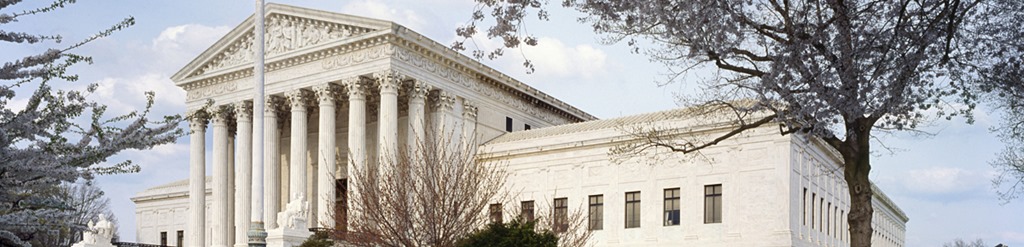
From the very beginning, affirmative action – using race as a factor in university admissions – has been controversial. Some say it’s unfair, that it amounts to reverse discrimination. Some have argued that it violates the Equal Protection Clause of Section 1 of the 14th Amendment to the US Constitution:
“All persons born or naturalized in the United States, and subject to the jurisdiction thereof, are citizens of the United States and of the state wherein they reside. No state shall make or enforce any law which shall abridge the privileges or immunities of citizens of the United States; nor shall any state deprive any person of life, liberty, or property, without due process of law; nor deny to any person within its jurisdiction the equal protection of the laws.” [my emphasis highlighting the Equal Protection Clause]
On the other hand, some people see affirmative action as a way to address America’s historic and present-day racial inequalities by providing underrepresented minorities with increased opportunities for post-secondary education, and by promoting greater understanding across racial divides through a more diverse student body.
The courts have struggled with race-conscious college admissions too.
Back in 1978, in a case called Regents of University of California v. Bakke, the nine justices of the US Supreme Court produced six different opinions on whether the medical school at the University of California, Davis could reserve a certain number of seats for minority students. Although the Court decided a quota system violated the Equal Protection Clause, it concluded that universities could sometimes use race in their admissions decisions if, for example, race were a “plus” factor used in the assessment of a student’s application.
It wasn’t until 2003, in a case called Grutter v. Bollinger which challenged the University of Michigan’s admissions process, that the Court clearly said student body diversity was a compelling enough goal to override the Equal Protection Clause.
Note that the Court has explicitly stated that ameliorating racial inequality is not a compelling enough goal. It is an impermissible violation of the Equal Protection Clause because it would result in preferring one group of applicants over another solely on the basis of their race.
So for the past 45 years, the Supreme Court has, with hesitation and reservation, permitted colleges and universities to include an applicant’s race as one factor in their admissions process.
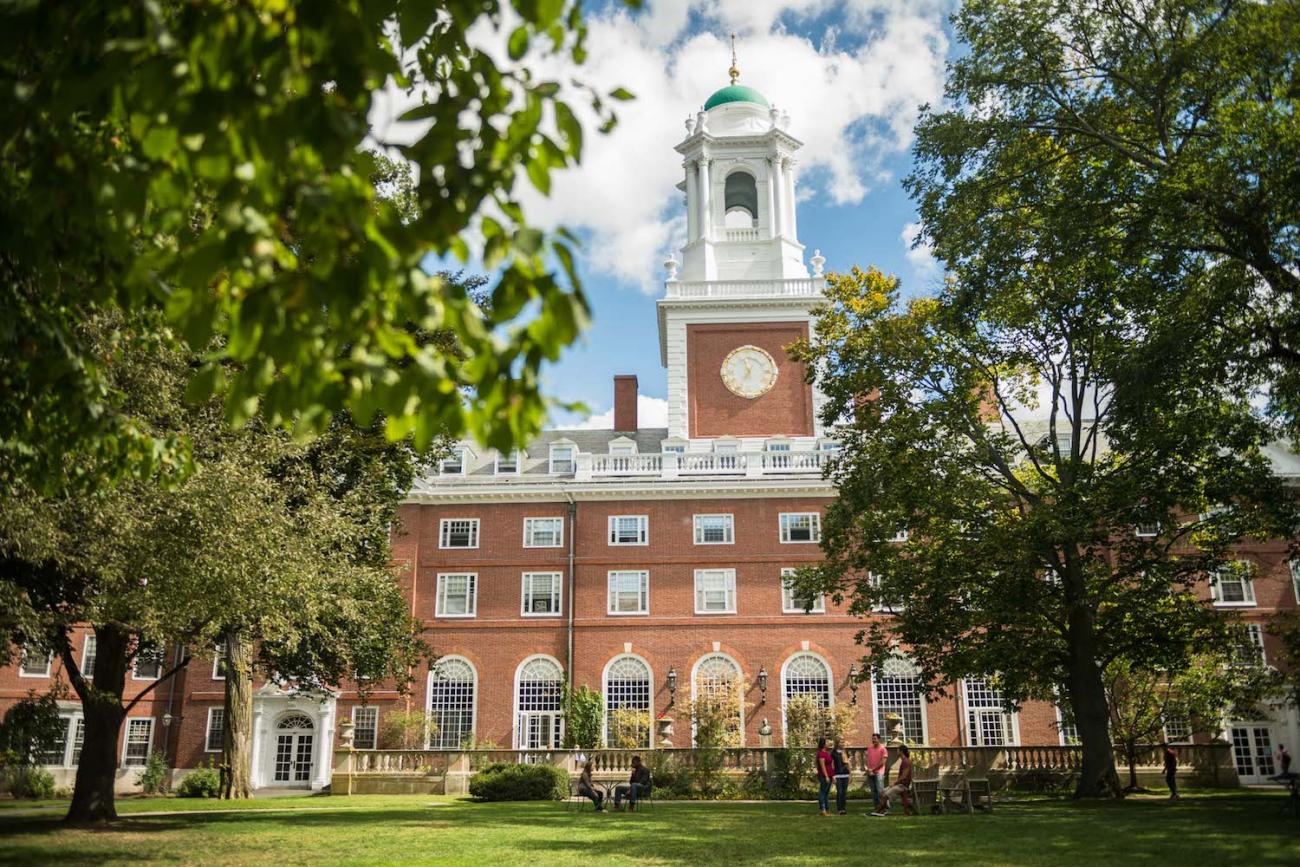
Last week, the Supreme Court threw out those precedents and ruled in Students for Fair Admissions Inc. v. President and Fellows of Harvard College that race-conscious admissions at Harvard and the University of North Carolina (UNC) are unconstitutional.
Chief Justice John Roberts wrote the opinion for the 6-to-3 majority. Justices Sonia Sotomayor and Ketanji Brown Jackson filed dissenting opinions.
Why now? Why this case? What’s changed?
Nothing.
Only the composition of the Court. Republican-appointed judges now make up a 6-to-3 supermajority on the Court and they are radically reshaping the legal landscape in the US.
We should stop calling this a “conservative” court. This is the most radical, ideological and activist Supreme Court we have seen in generations.
Apparently, the Court majority is just fine with the current state of racial inequality in America. This ruling prohibits universities from considering race explicitly in college admissions, even if it is only one among many factors. And they certainly can’t use race-based mechanisms to address racial inequality.
“In the years after Bakke, the Court repeatedly held that ameliorating societal discrimination does not constitute a compelling interest that justifies race-based state action.” [Opinion of the Court, p. 35]
Or, to use Roberts’s brutally simplistic words in a different case from 2007:
“The way to stop discrimination on the basis of race is to stop discriminating on the basis of race.”
In a brutally simplistic way, it’s hard to argue with this view. Ideally, the Constitution should be “colorblind” like the majority says. So should the country.
Except it’s not. If the playing field was level, if there were no racial inequalities, if minorities did not come to the starting line with disadvantages in health, education, income and wealth, then maybe I’d agree with the majority. But unfortunately, we don’t live in that world. At least not yet. The dissenting justices say it eloquently.
“Today, this Court stands in the way and rolls back decades of precedent and momentous progress. It holds that race can no longer be used in a limited way in college admissions to achieve such critical benefits. In so holding, the Court cements a superficial rule of colorblindness as a constitutional principle in an endemically segregated society where race has always mattered and continues to matter.” [Sotomayor dissent, p. 2]
“With let-them-eat-cake obliviousness, today, the majority pulls the ripcord and announces ‘colorblindness for all’ by legal fiat. But deeming race irrelevant in law does not make it so in life. And having so detached itself from this country’s actual past and present experiences, the Court has now been lured into interfering with the crucial work that UNC and other institutions of higher learning are doing to solve America’s real-world problems.” [Jackson dissent, p. 25]
The Court seems blind to the fact that racial inequality is baked very deeply into university admission processes (because it’s deeply baked into our society). If we really want to eliminate race as a factor in university admissions, then let’s eliminate it completely. Let’s eliminate consideration of grades, standardized tests, and especially legacy admissions, all of which are heavily stacked in favor of white students.
For example, one study from 2019 found that 43% of white students admitted to Harvard were either recruited athletes, legacy students, children of faculty and staff, or on the dean’s list (meaning they’re children of wealthy donors).
And a 2020 report from the Brookings Institution showed that SAT math scores reflect and perpetuate racial inequality.
The Court doesn’t acknowledge any of these additional race-based influences on university admissions. Yet its ruling blocks any overt race-conscious attempts to remedy racial inequality or promote student diversity.
How do we address racial inequality without taking race into account? The Court doesn’t say. Surely it can’t be by pretending inequality doesn’t exist. And it’s very difficult to see how this decision will contribute to progress in this area. As Justice Jackson wrote:
“It is no small irony that the judgment the majority hands down today will forestall the end of race-based disparities in this country, making the colorblind world the majority wistfully touts much more difficult to accomplish.” [Jackson dissent, p. 26]
I’ll agree with the majority on one point: university admissions are a zero-sum game.
“College admissions are zero-sum. A benefit provided to some applicants but not to others necessarily advantages the former group at the expense of the latter.” [Opinion of the Court, p. 27]
But again, the Court’s view is based on a narrow understanding of the total picture of racial inequality. As Justice Sotomayor says:
“Stated simply, race is one small piece of a much larger admissions puzzle where most of the pieces disfavor underrepresented racial minorities. That is precisely why underrepresented racial minorities remain underrepresented. The Court’s suggestion that an already advantaged racial group is “disadvantaged” because of a limited use of race is a myth.” [Sotomayor dissent p. 45]
I’ve only touched on a few highlights from this decision. For a deeper and better informed examination / excoriation I recommend reading or listening to the episode of the Strict Scrutiny podcast called The End of Affirmative Action.
A late-breaking development: In the wake of the Supreme Court’s decision, a group has just filed a complaint with the Department of Education targeting Harvard’s legacy admissions practices as discriminatory. Stay tuned.
Update (July 25, 2023): A study released yesterday by researchers from Harvard and Brown Universities shows that college admission processes at elite American universities massively favor rich kids. Here’s a report from NPR: Affirmative action for rich kids: It’s more than just legacy admissions. The full study is here: Diversifying Society’s Leaders? The Determinants and Causal Effects of Admission to Highly Selective Private Colleges.
Thanks for reading.
Related Links
Students for Fair Admissions Inc. v. President and Fellows of Harvard College
Full text of the Supreme Court’s decision, June 29, 2023.
Grutter v. Bollinger
Full text of the Supreme Court’s decision, June 23, 2003.
Regents of the University of California v. Bakke
Full text of the Supreme Court’s decision, June 28, 1978.
John Roberts doesn’t want race to matter as he ends affirmative action for college admission programs
Report by Joan Biskupic on CNN, June 29, 2023.
The Supreme Court turns ‘equal protection’ upside down
Editorial in The New York Times, June 30, 2023.
The End of Affirmative Action
Episode of the Strict Scrutiny podcast, June 29, 2023.
Study on Harvard finds 43 percent of white students are legacy, athletes, related to donors or staff
Report by Danielle Silva on NBC News, September 30, 2019.
SAT math scores mirror and maintain racial inequity
Report by Ember Smith and Richard V. Reeves of the Brookings Institution, December 1, 2020.
Harvard’s legacy admission targeted in civil rights complaint, in wake of national affirmative action ban
Report by Ivy Scott and John Hillard in The Boston Globe, July 3, 2023.
Discover more from Unsolicited Feedback
Subscribe to get the latest posts sent to your email.


 Unsolicited Feedback
Pingback: Biden v. Nebraska: Black-Robed Oligarchs | Unsolicited Feedback